Overview of standard PCR
draft
There are three steps in PCR (“ds” stands for double-stranded; “ss” stands for single-stranded).
- Initialization (denature) dsDNA to ssDNA: typical 94 ºC.
- Hybridize (anneal) primer and target ssDNA: this temperature can be anywhere between 35 and 65 ºC.
- Synthesize new DNA: 72 ºC.
Resources and materials needed
- DNA template. If samples of genomic DNA are used, typical concentrations in the reaction vessel are from 1 ng to as much as 1 μg for a 50 μL reaction. In principle if you start with more template DNA then you will have better amplification efficiency because there are more targets for the primer sequence to find. However, in practice, adding more template often reduces amplification efficiency, for a variety of reasons (see PCR Troubleshooting).
- A thermalcycler capable of programmed changes in temperature; ideally, the device has rapid ramping capability — one needs to move from one temperature to another quickly. The thermal block must be well insulated.
- Reaction vessels (tubes). You may work with single tubes, tube strips of typically 8 tubes linked together (Figure 1), or 96-well microplates (Figure 2). PCR reaction tubes are not like your typical microtubes, but rather they are thin-walled and therefore designed to have good thermal properties so that they reach temperatures rapidly.
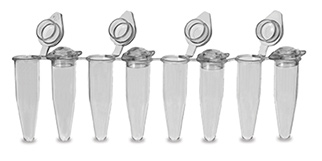
Figure 1. PCR strip — image from http://www.neptunescientific.com/products/tubes
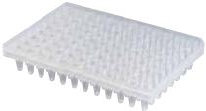
Figure 2. MicroAmp™ Fast Optical 96-Well Reaction Plate, 0.1 mL — image from https://www.thermofisher.com/order/catalog/product/4346907
Click here for a 96-well template sheet (pdf file).
- Two primers (forward & reverse). Primers are 20-40 nucleotides long and ideally have G-C content of 40-60%. Final concentrations of primers in the reaction are typically about 0.5 μM, but may range from 0.1 to 1 μM depending on the amount of template used.
- dNTPs: the triphosphate deoxribonucleotides (dATP, dTTP, dCTP, dGTP). For each dNTP, concentration in the reaction is usually 200 μM. The dNTPs may be added to the reaction mixture or are would be contained as part of the PCR Master Mix.
- Taq polymerase, a thermal stable DNA polymerase from the thermophilic bacterium Thermus aquaticus, often genetically engineered now, dramatically different from the wild. In most cases, commercially available Taq has been genetically modified to improve efficiency. Taq may be added to the reaction mix or will be part of a PCR Master Mix.
- Mg2+, often supplied as Mg2Cl, is an essential cofactor for Taq. Typical PCR would have final reaction concentration of Mg between 1.5 and 2.0 mM. Generally this will be included in a PCR Master Mix.
- Reaction buffer. Buffers are part of the general tool kit of a molecular biologist, Buffers are used to maintain pH.
- Nuclease-free water. Nucleases are ubiquitous in nature. Nucleases cut the phosphodiester bonds of DNA. Restriction enzymes, obtained from many species of bacteria (eg, E. coli has the restriction enzyme EcoRI), are one example of a kind of nuclease.
Use of Master Mixes
We use a 2X Master Mix for much of our PCR work this semester. A PCR Master Mix will incorporate items 5 through 8 from the above list. We’ve used this Master Mix in the past with success, but a typical research application of PCR for a target sequence would usually start with optimizing the PCR reaction by adding the components and substrates individually.
I’ve heard about “hot start” PCR…
A common variation to the standard thermalcycling protocol described above is to use a “hot start.” A PCR hot start refers to the 5 – 10 minute incubation at 94-95 ºC prior to cycling. The idea behind this strategy is that you have some concern that Taq may make some non-specific amplification products during the initial cycles of your protocol, ultimately leading to a mixture of products at the end. Hot start PCR involves use of special polymerases that become active only once the target temperature has been reached. The “special” comes from some method to block Taq activity, eg, by addition of an antibody. The hotstart involves ramping up the temperature up to 94 C for a few minutes which denatures the antibody, releasing the activity of the Taq polymerase.
Back
Polymerase Chain Reaction (PCR)
See also
Overview of RTqPCR
Troubleshooting of PCR
Primer design with Primer3
Go to Quiz questions
Additional Reading and References
Bartlett, J. M., & Stirling, D. (2003). A short history of the polymerase chain reaction. In PCR protocols(pp. 3-6). Humana Press. — pdf link
Garibyan, L., & Avashia, N. (2013). Research techniques made simple: polymerase chain reaction (PCR). The Journal of investigative dermatology, 133(3), e6. — link
Ponchel, F., Toomes, C., Bransfield, K., Leong, F. T., Douglas, S. H., Field, S. L., … & Robinson, P. A. (2003). Real-time PCR based on SYBR-Green I fluorescence: an alternative to the TaqMan assay for a relative quantification of gene rearrangements, gene amplifications and micro gene deletions. BMC biotechnology, 3(1), 18.
Wikipedia, http://en.wikipedia.org/wiki/Polymerase_chain_reaction
Klug et al (2010) 7th ed, pp 357-359
Meneely (2009), pp 273-274, 305-308