Overview of RTqPCR
If your starting material is RNA and your protocol does not require a separate cDNA synthesis step, you are using a
one-step RT-qPCR system. In this format, reverse transcription and PCR amplification occur in the same tube,
minimizing handling error and improving consistency across samples.
When the reaction includes a fluorescent dye such as SYBR Green, the assay becomes quantitative PCR (qPCR) because
amplification is monitored in real time. Combining both features gives one-step SYBR Green RT-qPCR, a widely used
method for measuring gene expression (Smith 2009; Curd et al 2011; Malekshahi et al 2022).
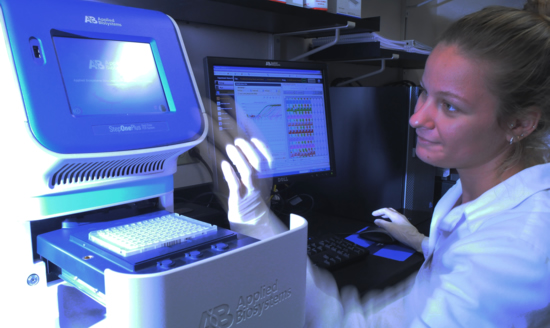
Figure 1. ABI StepOne Plus, Chaminade University student E. Andrie, 2014.
When the reaction includes a fluorescent dye such as SYBR Green, the assay becomes quantitative PCR (qPCR) because
amplification is monitored in real time. Combining both features gives one-step SYBR Green RT-qPCR, a widely used
method for measuring gene expression (Smith 2009; .
In this approach, SYBR Green binds to double-stranded DNA (dsDNA). As PCR amplification proceeds, more dsDNA is
produced, leading to a proportional increase in fluorescence. The instrument detects this signal during each cycle,
allowing quantification of the initial RNA template based on amplification kinetics (e.g., Ct values). Because SYBR
Green binds to any dsDNA, specificity depends entirely on primer design and reaction conditions, not on a probe.
One-step SYBR Green RT-qPCR is a streamlined, sensitive method for quantifying RNA, but it requires careful
experimental design. Because detection is non-specific, controls, melt curve validation, and technical replicates are
essential to ensure that your signal reflects the intended target and not artifacts.
One-step or Two-step RT-qPCR?
When measuring gene expression from RNA, you must decide how to organize reverse transcription and PCR. There are two standard approaches:
One-step RT-qPCR (single tube workflow). The workflow:
1. Extract RNA (Control vs Treatment samples)
2. Add RNA directly to reaction with:
- Reverse transcriptase.
- DNA polymerase.
- Primers (GOI + reference gene).
3. Run RT → qPCR in the same tube using SYBR Green.
4. Collect fluorescence each cycle.
5. Analyze Ct values.
Advantages:
- Fewer handling steps → lower contamination risk.
- Faster setup → high throughput friendly.
- Good for limited RNA samples.
Limitations:
- No separate cDNA stock → cannot re-run or test new genes.
- Less flexibility in assay design.
- Harder to troubleshoot RT vs PCR issues independently.
Two-step RT-qPCR (separate reactions). The workflow:
1. Extract RNA (Control vs Treatment samples).
2. Perform reverse transcription → generate cDNA.
3. Aliquot cDNA into multiple qPCR reactions.
4. Add primers (GOI + reference gene).
5. Run qPCR (e.g., SYBR Green).
6. Collect fluorescence each cycle
7. Analyze Ct values.
Advantages:
- cDNA can be reused → test multiple genes from the same sample.
- Greater flexibility and optimization.
- Easier troubleshooting (RT step vs PCR step separated).
Limitations:
- More handling → higher contamination risk.
- More time and pipetting variability.
- Requires careful normalization across runs.
Shared Core Workflow (both methods)
Regardless of approach:
1. **Start with RNA**
* Control vs Treatment samples
2. **Target selection**
* GOI (gene of interest)
* Reference (housekeeping) gene
3. **Amplification + detection**
* Fluorescence measured each cycle
4. **Set threshold → obtain Ct values**
* **Lower Ct = more starting RNA (higher expression)**
* But Ct values must be **normalized** before interpretation
5. **Analysis**
* ΔCt (GOI − reference)
* ΔΔCt (comparison across conditions)
—
## How to choose (decision logic)
* Use **one-step** when:
* RNA is limited
* You are measuring **a small number of genes**
* You want speed and consistency
* Use **two-step** when:
* You need to analyze **many genes from the same samples**
* You want flexibility and archivable cDNA
* You are optimizing or troubleshooting assays
—
## Key takeaway
* **One-step = efficiency and containment**
* **Two-step = flexibility and reuse**
Both produce Ct values, but the choice determines how much **control, scalability, and troubleshooting power** you have over the experiment.
Controls in RT-qPCR (Essential for Interpretation)
A well-designed experiment includes multiple controls to validate results:
- NTC (No Template Control): Contains all reagents except template RNA. Detects contamination or primer-dimer formation.
- No-RT Control : Contains RNA but no reverse transcriptase. Detects genomic DNA contamination.
- PC (Positive Control): A sample known to express the target gene. Confirms that the assay works.
- Reference (Housekeeping) Gene : A stable gene (e.g., ACTB, GAPDH) used for normalization of expression levels across samples.
- IPC (Internal Positive Control): An exogenous or endogenous control added to monitor reaction efficiency and
identify inhibition. - NAC (No Amplification Control): A reaction missing a critical component (e.g., polymerase) to confirm that
amplification signals are enzyme-dependent.
Bold: “mandatory” controls.
Melt Curve Analysis (Critical for SYBR Green Assays)
Because SYBR Green detects all dsDNA, melt curve analysis is required to verify specificity. After amplification:
- The instrument gradually increases temperature.
- Double-stranded DNA melts into single strands.
- Fluorescence decreases as SYBR Green is released.
A single sharp peak indicates a specific product. Multiple peaks or broad peaks suggest non-specific amplification or
primer-dimers.
Technical Replicates (Non-negotiable for Reliable Data)
Replication in RT-qPCR: What Problem Are You Solving? Recall that two distinct experiment goals require two distinct types of replication:
1. Biological Replicates → Inference about the system
These are independent samples (e.g., different cultures, animals, or treatments). They capture true biological variability and are the only basis
for testing hypotheses (e.g., “gene X is upregulated under stress”).
- Variation reflects real differences in the system
- Enables statistical testing (t-tests, ANOVA, etc.)
- Minimum of 3 is common, but more is strongly preferred for robust inference
2. Technical Replicates → Reliability of the measurement
These are repeat measurements of the same sample (same RNA, same cDNA, same well contents split across wells). They quantify assay-level variability, not biology.
- Variation reflects pipetting error, stochastic amplification effects, instrument noise
- Does not increase statistical power for biological conclusions
- Used to decide whether a measurement is trustworthy enough to include
Why Technical Replicates Matter (Concrete Failure Modes)
With limited RNA input and SYBR Green chemistry, several specific interpretation problems arise that technical
replicates help detect:
1. Pipetting error → False fold-changes
A small volume error (e.g., ±0.5 µL in a 10 µL reaction) can shift Ct by ~0.3–1 cycle.
Without replicates:
- Why this matters (translate Ct spread → biology)
- You may conclude a ~2-fold expression change that is purely technical: if your technical replicates differ by 1
Ct, your measurement uncertainty alone spans a 2× change—which is the same magnitude many of us would be tempted
to interpret as “biologically meaningful.”
- You may conclude a ~2-fold expression change that is purely technical: if your technical replicates differ by 1
- With replicates: High Ct spread (e.g., 22.1, 23.4, 22.3) flags the measurement as unreliable.
- In qPCR, variability is evaluated in Ct units, because the Ct scale is log₂-based (each cycle ≈ 2-fold change in
template). - Replicates within ±0.5 Ct would be considered acceptable for SYBR Green assays.
- In qPCR, variability is evaluated in Ct units, because the Ct scale is log₂-based (each cycle ≈ 2-fold change in
2. Stochastic amplification at low template → Dropouts or late Ct
At low RNA abundance, early cycles are probabilistic. Without replicates: a single late Ct (or no amplification) could
be misinterpreted as low expression or absence. But, with replicates: mixed outcomes (e.g., Ct = 30, 31, undetermined) indicate you are near the limit of detection, not true absence.
3. Primer-dimer or non-specific amplification (SYBR Green-specific issue)
SYBR Green detects any dsDNA, including artifacts. Without replicates: a single well showing amplification may be
mistaken for true target signal. However, with replicates: inconsistent Ct values across wells suggest non-specific amplification, prompting inspection of melt curves.
4. Well-to-well instrument variation
Edge effects, evaporation, or optical variation can shift Ct slightly. Without replicates: small Ct differences
between samples may be overinterpreted. With replicates: you can estimate
within-sample technical variance
and judge whether observed differences exceed it.
What Technical Replicates Actually Let You Do
With n = 3 technical replicates, your goal is not outlier detection in a statistical sense, but it can be viewed as
basic quality control:
- Calculate mean Ct
- Examine spread (e.g., ΔCt range or standard deviation)
- Apply a simple rule:
- If replicates differ by >0.5–1 Ct, flag or exclude
- Decide whether the measurement is usable or should be repeated.
Practical Summary
Biological replicates answer: Is the effect real?
Technical replicates answer: Is this measurement reliable enough to use?
In SYBR Green one-step RT-qPCR—especially with limited RNA—technical replicates are essential because they expose
measurement artifacts (pipetting error, stochastic amplification, non-specific products). These artifacts, if
undetected, propagate through ΔCt/ΔΔCt calculations and can produce false biological conclusions.
Therefore, technical replicates ensure measurement validity, which is a prerequisite for—but not a substitute
for—biological inference based on independent samples.
Background
Next up
Additional Reading and References
Your textbook(s)
Brown, T. A. (2018)
Genomes 4
(pp. 41, 126-7,258). Garland Science
Klug, W. S., Cummings, M. R., Spencer, C. A., & Palladino, M. A. (2015).
Concepts of Genetics
(pp. 502-3). Pearson Higher Ed.
Wikipedia,
https://en.wikipedia.org/wiki/Real-time_polymerase_chain_reaction
Papers
Arikawa, E., Sun, Y., Wang, J., Zhou, Q., Ning, B., Dial, S. L., … & Yang, J. (2008). Cross-platform comparison
of SYBR® Green real-time PCR with TaqMan PCR, microarrays and other gene expression measurement technologies evaluated
in the MicroArray Quality Control (MAQC) study.
BMC genomics
,
9
(1), 328.
Bartlett, J. M., & Stirling, D. (2003). A short history of the polymerase chain reaction. In
PCR protocols
(pp. 3-6). Humana Press. —
pdf link
Curd, E., Pollinger, J., Toffelmier, E., & Smith, T. (2011). Rapid influenza A detection and quantitation in birds
using a one-step real-time reverse transcriptase PCR and High Resolution Melting. Journal of Virological Methods,
176(1–2), 125–130. https://doi.org/10.1016/j.jviromet.2011.05.033
Garibyan, L., & Avashia, N. (2013). Research techniques made simple: polymerase chain reaction (PCR).
The Journal of investigative dermatology
,
133
(3), e6. —
link
Holland, P. M., Abramson, R. D., Watson, R., & Gelfand, D. H. (1991). Detection of specific polymerase chain
reaction product by utilizing the 5′—-3’exonuclease activity of Thermus aquaticus DNA polymerase.
Proceedings of the National Academy of Sciences
,
88
(16), 7276-7280.
link
Malekshahi, A., Khanizadeh, S., Fallahi, S., Talei, G., Birjandi, M., & Hajizadeh, F. (2022). Diagnostic power of
one-step and two-step RT-qPCR methods to SARS‑CoV‑2 detection. BMC Infectious Diseases, 22(1), 505.
https://doi.org/10.1186/s12879-022-07478-0
Ponchel, F., Toomes, C., Bransfield, K., Leong, F. T., Douglas, S. H., Field, S. L., … & Robinson, P. A. (2003).
Real-time PCR based on SYBR-Green I fluorescence: an alternative to the TaqMan assay for a relative quantification of
gene rearrangements, gene amplifications and micro gene deletions.
BMC biotechnology
,
3
(1), 18.
link
Smith, C. J., & Osborn, A. M. (2009). Advantages and limitations of quantitative PCR (Q-PCR)-based approaches in
microbial ecology. FEMS Microbiology Ecology, 67(1), 6–20. https://doi.org/10.1111/j.1574-6941.2008.00629.x
Wong, M. L., & Medrano, J. F. (2005). Real-time PCR for mRNA quantitation.
Biotechniques
,
39
(1), 75-85.
link