Overview of RTqPCR
If the starting material is RNA, and your protocol calls for making cDNA, then you’re probably talking about reverse transcriptase, or RT-PCR. If your protocol calls for following the progress of the PCR over time by use of a fluorophore like Sybr Green, then your PCR is quantitative, or qPCR. Put them together and you have RT-qPCR, or as I call it, RTqPCR.
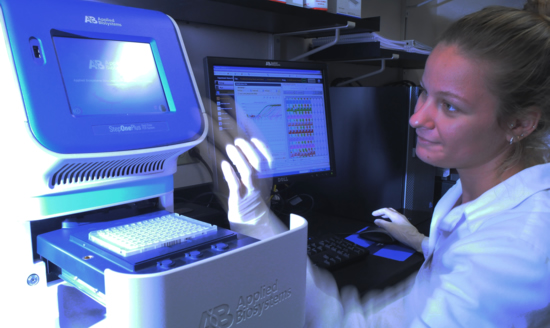
Figure 1. ABI StepOne Plus, Chaminade University student E. Andrie, 2014.
A variant of PCR, RTqPCR is used to detect and quantify PCR products derived from RNA during each cycle of the PCR run, ie, during real time. The principle of the technique is that a fluorescent signal is linked to the amplification of the PCR product. This linking is done by one of four approaches. The first approach is to use a oligonucleotide probe labeled with a fluorophore. The probe is labeled at the 5′ end with a fluorescent marker. The 5′ endonuclease activity of Taq DNA polymerase is used to cut the probe during PCR, which generates a fluorescent signal that is recorded. Specificity to target is obtained is conferred at three levels: via two PCR primers and the probe. The probe-based method is sold as TaqMan probes by Applied Biosystems and is based on work done by Dr Mullis in 1991 (and others!).
The second approach is based on an intercalating dye, like Sybr Green. As PCR product is produced, the dye intercalates with double-stranded DNA and fluoresces brilliantly, which allows monitoring of the PCR reaction. Specificity to target is mediated only by the two PCR primers. The Sybr Green method of qPCR was introduced in 2003 (Ponchel et al 2003).
The other two approaches are molecular beacon and scorpion probes. These are sequence specific methods, analogous to TaqMan.
One step or two?
Get RNA from samples Controls, Treatments
Make cDNA (reverse transcriptase)
Primers (GOI + HKG reference)
Run qPCR (SYBR Green, Get signal each cycle)
Analyze
Set threshold
Obtain CT values (e.g., Low CT = high mRNA for that gene)
Back
Polymerase Chain Reaction (PCR)
Next up
PCR Troubleshooting
Primer design with Primer3
See for questions about this handout
Additional Reading and References
Your textbook(s)
Brown, T. A. (2018) Genomes 4 (pp. 41, 126-7,258). Garland Science
Klug, W. S., Cummings, M. R., Spencer, C. A., & Palladino, M. A. (2015). Concepts of Genetics (pp. 502-3). Pearson Higher Ed.
Wikipedia, https://en.wikipedia.org/wiki/Real-time_polymerase_chain_reaction
Articles
Arikawa, E., Sun, Y., Wang, J., Zhou, Q., Ning, B., Dial, S. L., … & Yang, J. (2008). Cross-platform comparison of SYBR® Green real-time PCR with TaqMan PCR, microarrays and other gene expression measurement technologies evaluated in the MicroArray Quality Control (MAQC) study. BMC genomics, 9(1), 328.
Bartlett, J. M., & Stirling, D. (2003). A short history of the polymerase chain reaction. In PCR protocols(pp. 3-6). Humana Press. — pdf link
Garibyan, L., & Avashia, N. (2013). Research techniques made simple: polymerase chain reaction (PCR). The Journal of investigative dermatology, 133(3), e6. — link
Holland, P. M., Abramson, R. D., Watson, R., & Gelfand, D. H. (1991). Detection of specific polymerase chain reaction product by utilizing the 5′—-3’exonuclease activity of Thermus aquaticus DNA polymerase. Proceedings of the National Academy of Sciences, 88(16), 7276-7280. link
Ponchel, F., Toomes, C., Bransfield, K., Leong, F. T., Douglas, S. H., Field, S. L., … & Robinson, P. A. (2003). Real-time PCR based on SYBR-Green I fluorescence: an alternative to the TaqMan assay for a relative quantification of gene rearrangements, gene amplifications and micro gene deletions. BMC biotechnology, 3(1), 18. link
Wong, M. L., & Medrano, J. F. (2005). Real-time PCR for mRNA quantitation. Biotechniques, 39(1), 75-85. link